強さのメーカー
品質保証
親密なサービス
The difference between USB interfaces is that PD fast charging is a charging protocol that belongs to the USB TYPE C interface and can only be used for USB type C interfaces. QC fast charging: Common Android Micro-B, USB type A, and USB type C interfaces. 2.2. The communication recognition channel of the fast charging is inconsistent. PD fast charging is not recognized through the communication protocol of D+, D -. Note: PD fast charging is not recognized through the communication protocol of D+, D -. PD fast charging is recognized through CC pin communication. QC3.0/QC2.0 are identified by synchronous D+and D - communication protocols. The Micro-B is also designed to distinguish between the two fast charging devices. In the USB type C interface, there are also D+and D pin pins. The USB type C can be used as a dual compatible product for PD and QC fast charging. Micro-B and USB TYPE A can only use QC3.0/QC2.0 protocols. 2.3. Differences in charging power for power supply: QC3.0/QC2.0 fast charging is the earliest high-voltage fast charging protocol, with a charging power of generally 18W and a maximum charging power of 30W. PD fast charging is currently the most comprehensive fast charging protocol, and PD3.0 can support a maximum power of up to 100W. PD3.1 currently supports a maximum power of 140W.
Domestic brands such as Huawei and OPPO are private agreements and not open to the public. In addition to authorized manufacturers of mobile phone brands or original chargers, it can support maximum power charging of mobile devices. Other non original chargers cannot support maximum power charging of the phone, and the charging time will be longer.
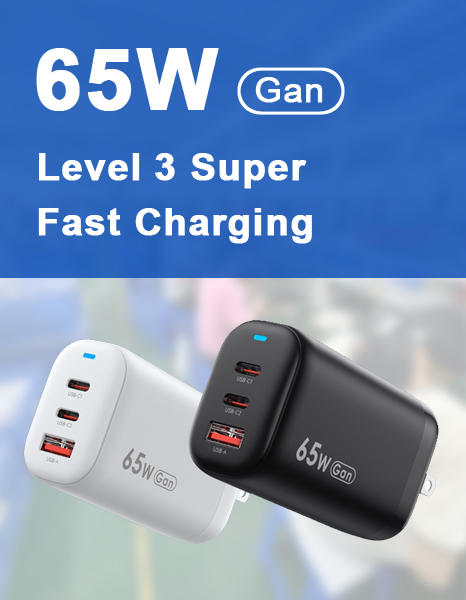
Gallium nitride chargers are mainly charging devices that use gallium nitride as an important raw material. Compared to mobile phone chargers that previously used "silicon" as an important raw material, their biggest advantage lies in their smaller size, stronger output power, and more environmentally friendly and energy-saving.The advantages of gallium nitride chargers are small size and safety. Compared with ordinary semiconductor silicon materials, gallium nitride has a wider bandgap and good thermal conductivity, which can match smaller transformers and high-power inductors. Therefore, gallium nitride chargers have advantages such as small size, high efficiency, and more safety.